


Please Leave Us A Message
Privacy statement: Your privacy is very important to Us. Our company promises not to disclose your personal information to any external company with out your explicit permission.
 Zhejiang Ailipu Technology Co., Ltd.
Mechanical Diaphragm Dosing Pump
Hydraulic Diaphragm Metering Pump
Select Language
English
Metering Pump is a special positive displacement pump which can meet the needs of various strict technological processes, and the flow can be adjusted steplessly within 0 - range. It is used to transport liquids (especially corrosive liquids).With the continuous development of modern industry towards automatic operation and remote automatic control , the advantages of strong matching and wide adaptability to media (liquid) of metering pump are particularly prominent.
In the long-term use of the metering pump, some small problems will inevitably appear, so how to solve them?

Here are some solutions to common problems:
Rotate to stroke length position. This allows the entire assembly to rotate to the backing plate drain hole aligned with the bottom end of the pump. Adjust the hydraulic end and diaphragm to the appropriate position during pump operation.
The pulse duration may not be long enough for the reaction time. The flow monitor pulse width extension can be activated to increase the pulse width to 300 MS relative to the standard pulse width of 80 MS. Activate the intelligent transfer switch, remove the cover of the fixed circuit board and remove the jumper X-1. This activates the extended function allowing more time before fault indication.
The metering pump is equipped with a self-exhaust pump head and uses self-filling suction. Keep the suction line as short as possible.
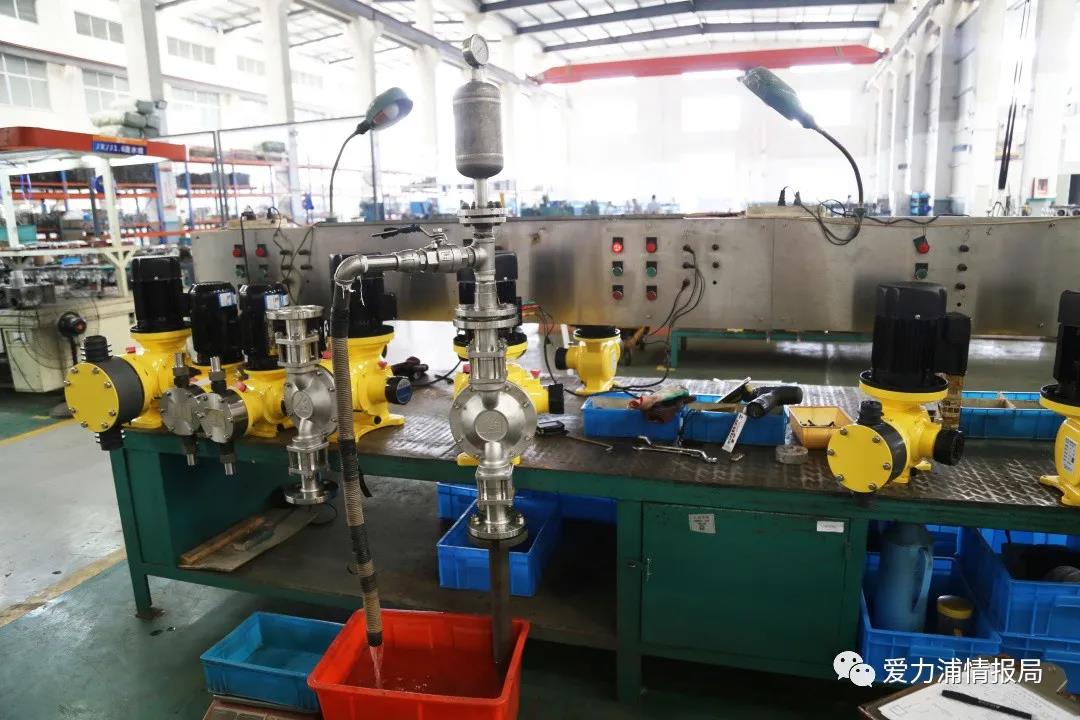
Trouble often occurs when removing old diaphragms.
1) After the head is loose, adjust the stroke length to 10% before removing the head. This ensures that the solenoid shaft has sufficient pressure to maintain a firm connection so that the diaphragm can be unscrewed.
2) Pull the hydraulic end outward to disengage the screw from the socket. Grasp the liquid end and rotate counterclockwise. With slight resistance, the diaphragm can be unscrewed.
3) Metered chemicals may crystallize at the hydraulic end, causing the ball and seat of the check valve to not function properly.
4) Gas leakage may occur at the suction side of the metering pump. The connection on the suction side of the hydraulic end may lack an O-ring or the connection on the suction valve may be loose.
Move the hydraulic end by loosening the 4 pump head screws.
Rotate the stroke length to 10% and grasp the hydraulic end, and then slide out of the screw hole. Then the screws do not contact them, but still hold the back plate and diaphragm. Then rotate the component counterclockwise. With a little resistance, the diaphragm will loosen from the electromagnetic shaft.
If the diaphragm is not loose, use some lubricating oil on the contact surface between the diaphragm and the electromagnetic shaft. After a few minutes, gently tap the diaphragm with a small plastic hammer. Then proceed again as described above
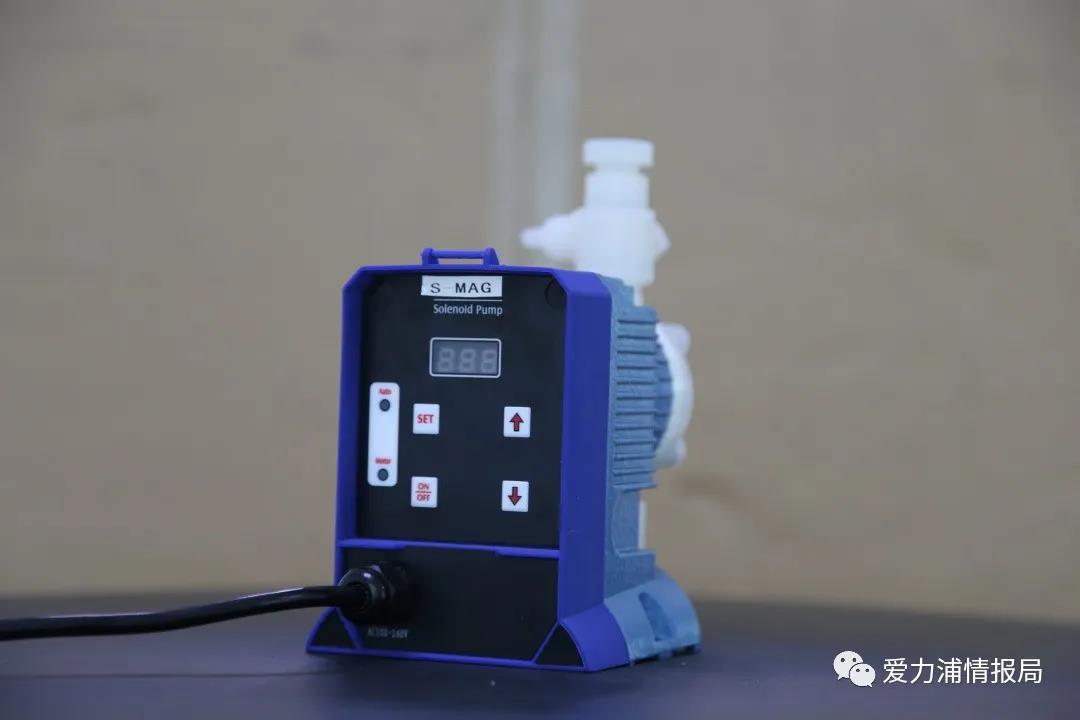
1) Remove the 4 screws fixing the pump head. The screw is located on the back of the metering pump.
2) See if the pressure relief pipe is installed and the pressure relief valve is closed? The discharge valve needs to be opened in the liquid introduction stage of the metering pump. Note: not all metering pumps have pressure relief valve valves.
3) After the diaphragm is installed and the leakage discharge hole of the back plate is placed in a vertical position, install the pump head. Ensure that the suction valve is aligned with the leakage discharge hole, and the screws at the hydraulic end are aligned with the corresponding 4 holes.
1) Unscrew the vent valve in the three valves.
2) Fully replenish oi through the Oil refilling valve

October 03, 2023
How to distinguish single screw pump, twin screw pump and three screw pump: As the name suggests, a single screw pump is only a screw in the pump. Follow the habits of China's screw industry, naming,...
High temperature control valve is the working temperature is greater than 450 ℃ valve. Can be divided into 450 ~ 600 ℃, 600 ~ 700 ℃, 750 ℃ three categories. What are the main problems usually...
Float level gauge is widely used in liquid level, chemical industry, metallurgy, electric power, paper making, food and industrial sewage treatment and other departments. By the magnetic reed switch,...
Because more and more factories use automatic control, manual operation is replaced by mechanical or automation equipment, the executive body is required to act as an interface between the control...
Email to this supplier
October 03, 2023
Related Products List
Contact Us

Privacy statement: Your privacy is very important to Us. Our company promises not to disclose your personal information to any external company with out your explicit permission.
Fill in more information so that we can get in touch with you faster
Privacy statement: Your privacy is very important to Us. Our company promises not to disclose your personal information to any external company with out your explicit permission.